This one is dedicated to my good friend Steve at Arwen's Meanderings. Here's wishing you some DECENT WEATHER this year my friend. I hope you get plenty of sailing in this summer. You earned it.
Sunday, April 7, 2013
Adventure is out there
Gosh it's been nearly a year since my last Blue Man Group sailing video. Sorry folks! Here you go. This is my favorite BMG tune, called Rods and Cones. Crank it up! In case you haven't guessed by now, I'm a big BMG fan. Can't wait to see their new show.
This one is dedicated to my good friend Steve at Arwen's Meanderings. Here's wishing you some DECENT WEATHER this year my friend. I hope you get plenty of sailing in this summer. You earned it.
This one is dedicated to my good friend Steve at Arwen's Meanderings. Here's wishing you some DECENT WEATHER this year my friend. I hope you get plenty of sailing in this summer. You earned it.


Thursday, April 4, 2013
Spring Tweaks
I finally got around to tweaking a few things on Ellie that have been bothering me for a while.
Tweak #1: Jib Fairleads
When I built Ellie, somehow I missed the note on plan sheet NV11 that tells you where to locate the jib fairleads. They should be located 120mm aft of B4 and close to the coamings. The fairleads have been relocated per the plans. Verdict: The jib shape appears noticeably improved.
Tweak #2: Roller Furler deck block.
My roller furler line makes a 90 degree turn through a fairlead in the deck. The arrangement works, but created unwanted friction and abrasion on the line. I scoured the internet searching for a block that would work here but could not find one. I finally gave up and fashioned my own.
I made the deck block from a small swivel that I got from Duckworks. I cut one leg off of one side, and added a roller to the other and mounted it right over the fairlead. Verdict: works great. Much less friction and no more abrasion.
Tweak #3: Halyard Cleats
For my mainsail halyard cleats I was using cam cleats which, like all cleats, have their pros and cons. I liked how I could easily give the halyards a tug to tighten them but I didn't like the angle that I had to pull the halyards at, how they took two hands to secure the halyards, and how a stop knot was required in case the halyard became inadvertently released. For my application the ideal halyard cleat should have these features
I couldn't find cleats that I liked so I ended up making my own jam cleats from white oak and painted them black to match my other cleats. They're similar to these. Verdict: I like them a lot. They met all my expectations.


Tweak #4: Whipping
I finally got around to whipping the ends of all my lines. Verdict: very salty.
 Tweak #5: Boom height
This was the biggest tweak. The boom on my gaff-rigged Navigator is right about at chin level. I've always wished it cleared my head like it does on the lug-rigged sailplan. So I decided to raise the boom enough to clear my head (10 inches) and give it a try. This involved moving the gooseneck 10 inches higher on the mast and lowering the gunter on the gaff by 10 inches.
Verdict: The jury is still out on this one. The boom clears my head nicely, but raising the sail 10 inches made a noticeable difference in the way the boat sails. The boat heels over more now and reacts more to gusts. One of the things I like most about Navigator is how stable and upright she sails. It was uncomfortable to feel her reacting this way. I think I'll sail her a few more times with the boom in this position but right now I'm leaning towards putting the boom back where it was or at least not raising it quite as high. [UPDATE: Eventually settled on 6" above the plan location. Seems to be the best compromise between safety, appearance and performance]
Here is some video of the year's first sail, with the raised boom.
Maybe I should switch to a gooseneck mounted on a sailtrack. What do you think?
Tweak #1: Jib Fairleads
When I built Ellie, somehow I missed the note on plan sheet NV11 that tells you where to locate the jib fairleads. They should be located 120mm aft of B4 and close to the coamings. The fairleads have been relocated per the plans. Verdict: The jib shape appears noticeably improved.
 |
| Before |
 |
| After |
Tweak #2: Roller Furler deck block.
My roller furler line makes a 90 degree turn through a fairlead in the deck. The arrangement works, but created unwanted friction and abrasion on the line. I scoured the internet searching for a block that would work here but could not find one. I finally gave up and fashioned my own.
 |
| After |
 |
| Before |
I made the deck block from a small swivel that I got from Duckworks. I cut one leg off of one side, and added a roller to the other and mounted it right over the fairlead. Verdict: works great. Much less friction and no more abrasion.
Tweak #3: Halyard Cleats
For my mainsail halyard cleats I was using cam cleats which, like all cleats, have their pros and cons. I liked how I could easily give the halyards a tug to tighten them but I didn't like the angle that I had to pull the halyards at, how they took two hands to secure the halyards, and how a stop knot was required in case the halyard became inadvertently released. For my application the ideal halyard cleat should have these features
- Ability to secure the halyard to the cleat with one hand.
- Ability to remove the halyard from the cleat with one hand.
- Ability to pull the halyard at any angle.
- Ability to secure the halyard to the cleat with no possibility of it accidentally coming undone.
- Should not have plastic teeth that can wear out.
I couldn't find cleats that I liked so I ended up making my own jam cleats from white oak and painted them black to match my other cleats. They're similar to these. Verdict: I like them a lot. They met all my expectations.


Tweak #4: Whipping
I finally got around to whipping the ends of all my lines. Verdict: very salty.

This was the biggest tweak. The boom on my gaff-rigged Navigator is right about at chin level. I've always wished it cleared my head like it does on the lug-rigged sailplan. So I decided to raise the boom enough to clear my head (10 inches) and give it a try. This involved moving the gooseneck 10 inches higher on the mast and lowering the gunter on the gaff by 10 inches.
 | |||
| After with boom 10" higher |
 |
| Before |
Verdict: The jury is still out on this one. The boom clears my head nicely, but raising the sail 10 inches made a noticeable difference in the way the boat sails. The boat heels over more now and reacts more to gusts. One of the things I like most about Navigator is how stable and upright she sails. It was uncomfortable to feel her reacting this way. I think I'll sail her a few more times with the boom in this position but right now I'm leaning towards putting the boom back where it was or at least not raising it quite as high. [UPDATE: Eventually settled on 6" above the plan location. Seems to be the best compromise between safety, appearance and performance]
Here is some video of the year's first sail, with the raised boom.
Maybe I should switch to a gooseneck mounted on a sailtrack. What do you think?
Tuesday, March 26, 2013
Navigator Mast Handling
There's been a bit of discussion on the Welsford Builders forum lately about stepping the mast on a Navigator or Pathfinder. How difficult is it? Can it be done unassisted by anyone, regardless of age or physical capability? Is a tabernacle necessary? How about stepping the mast on the foredeck or the front thwart instead? Should the mast be built hollow or solid? From wood or aluminum tubing?
It all depends on the abilities and desires of each individual builder of course, and that is one of the big advantages of building your own boat.
I built my mast hollow using the birds mouth technique. This technique is a bit more work, but results in a mast that is up to 40% lighter and equal in strength to a solid wooden mast. The technique is well documented at duckworks. It's well worth the additional effort in my opinion. A lighter mast is not only easier to step and unstep, but reducing weight aloft also improves a sailboat's performance.
Here is a short video that shows how easy it is to step, unstep and handle the mast on my Navigator. My mast weighs 17 lbs (7.7kg) not including hardware. It is not difficult to handle, and as you can see I'm no athlete. If you're a Navigator builder, I hope this video helps you decide how to build your mast.
It all depends on the abilities and desires of each individual builder of course, and that is one of the big advantages of building your own boat.
I built my mast hollow using the birds mouth technique. This technique is a bit more work, but results in a mast that is up to 40% lighter and equal in strength to a solid wooden mast. The technique is well documented at duckworks. It's well worth the additional effort in my opinion. A lighter mast is not only easier to step and unstep, but reducing weight aloft also improves a sailboat's performance.
Here is a short video that shows how easy it is to step, unstep and handle the mast on my Navigator. My mast weighs 17 lbs (7.7kg) not including hardware. It is not difficult to handle, and as you can see I'm no athlete. If you're a Navigator builder, I hope this video helps you decide how to build your mast.
Tuesday, February 26, 2013
Another Navigator nearing completion Down Under
Lester Searle is nearing completion of his Navigator yawl Leighton. Lester is building his Navigator in Coffs Harbour, New South Wales, which is on the East coast of Australia - about midway between Sydney and Brisbane.

Lester named his Navigator in honor of his father and his service during World War II.

Lester tells me he's "given the plastic a workout at Duckworks" and has "got to the really scary bit for me - the rigging."


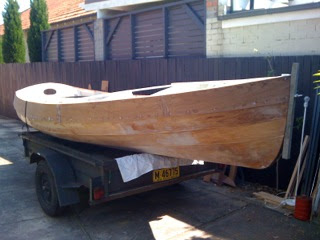
Looks like fine workmanship to me, Lester!
For his yawl rigged Navigator, Lester rigged his mainsail as a sliding Gunter main, but with a sprit boom in lieu of the conventional boom. I've seen this rig many times on other Navigators, but I haven't heard much discussion from those who have used this setup. I'm very interested in hearing how he likes it.

Congratulations, Lester, on your accomplishments thus far. We are all looking forward to your upcoming "splash", and wish you many, many years of joy and adventure aboard Leighton.
Lester named his Navigator in honor of his father and his service during World War II.
"She's called Leighton which was the name of the British merchantman out of Liverpool my Dad was serving on in WW2 when he met my Mum in Fremantle West Australia."

Lester tells me he's "given the plastic a workout at Duckworks" and has "got to the really scary bit for me - the rigging."
"Still no rub rails but think I will get her in the water sometime in the next few weeks."
"I am not an experienced sailor so this is the most mysterious part of the whole thing. I am not an experienced boat builder either - gardener by trade and latter day pen pusher - so the building thing has been great fun."


Looks like fine workmanship to me, Lester!
"...sometimes I just go down to the shed (4th one so far in a seven year build) and look at her and feel happy. "
For his yawl rigged Navigator, Lester rigged his mainsail as a sliding Gunter main, but with a sprit boom in lieu of the conventional boom. I've seen this rig many times on other Navigators, but I haven't heard much discussion from those who have used this setup. I'm very interested in hearing how he likes it.

Congratulations, Lester, on your accomplishments thus far. We are all looking forward to your upcoming "splash", and wish you many, many years of joy and adventure aboard Leighton.
Thursday, September 13, 2012
Port Townsend Wooden Boat Festival 2012, day 3
Final day of the festival.
Without a doubt, the hit of this year's festival has to be James McMullen's "Bar Tender" dinghy.


I caught a glimpse of James towing his keg laden dinghy on the way into the festival on Thursday, then gladly accepted a brew after we had set up, but it wasn't until now that I had a chance to fully appreciate it in all its glory. Beauty, brilliance, utility, usefulness, hops, barley. It's got it all. Well done James!
Without a doubt, the hit of this year's festival has to be James McMullen's "Bar Tender" dinghy.
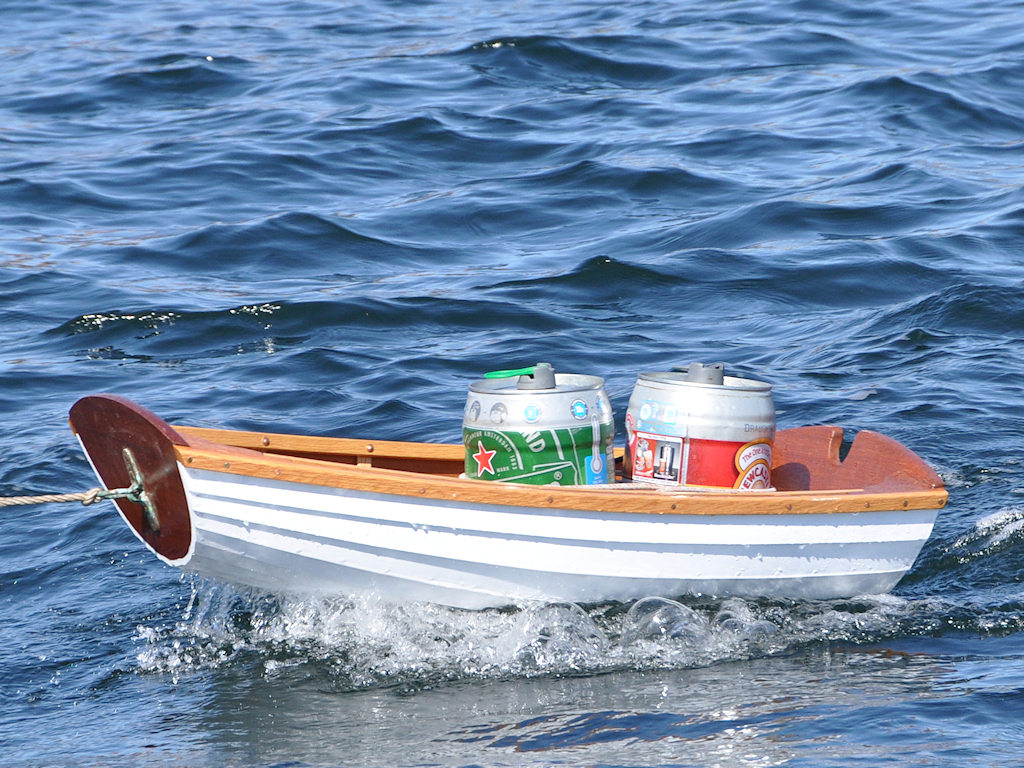

I caught a glimpse of James towing his keg laden dinghy on the way into the festival on Thursday, then gladly accepted a brew after we had set up, but it wasn't until now that I had a chance to fully appreciate it in all its glory. Beauty, brilliance, utility, usefulness, hops, barley. It's got it all. Well done James!
Port Townsend Wooden Boat Festival 2012, day 2
Saturday, the busiest day of the Festival.
I headed over to sign up for a rowing/sailing trip aboard the longboats. These longboats are replicas of the longboats used by Captain George Vancouver to explore the Puget Sound region in 1792. I've been wanting to take a tour on them for years, but haven't been able to until now because they were either full or there were too many other things to see and do. There are so many things to do at the festival there is no way to do them all.

These 26' replica longboats are used by the Northwest Maritime Center School Programs. They are each equipped with 8 rowing stations and 3 dipping lug sails. They are used to teach youth teambuilding, problem solving, and maritime skills. Teenagers attend intensive 2-5 day programs of discovery and exploration where they learn to row, sail, learn navigation, compass use, knots, marine biology, history and more. They are also used in the Pacific Challenge.

Fortunately, we had several of these teenage students aboard to help us learn to row in sync and teach us how to tack the three sails on our dipping lug rig.
The first lesson we learned was "Crab!". "Crab!" is what you yell out when the rowers get out of sync and get their oars all tangled up, which usually brings all four rowers on that side to a halt.
To prevent Crabs, one rower is designated as the pace setter. From the rower's point of view, it's the rower on their right and all the way up front. The rowers are all facing aft of course, so that would make him the aft-most port-side rower. Anyway, the rower to his immediate left is supposed to row in sync with him. The rest of the rowers are all supposed to keep in sync with the rower seated immediately in front of them. Sounds simple, right? We had lots of Crabs. All it takes to create a Crab is for one rower to lose focus for a second or two.
Tacking the dipping lug rig involved a complex sequence of tacking the halyard, the sail tack, tacking the sheets, lowering the sail and dipping the yard, that I still don't fully understand. It was unlike anything I'd ever done before and required about 3 or 4 people on each sail. I loved it! I wish I were a teenager so I could sign up for these programs. I also have a new found respect for the crew of these longboats. After only a half hour of rowing, my hands were numb and my back started to ache. Vancouver's explorers often rowed for hours upon hours exploring and charting the miles of coastlines here. Here's a bit of video. It's not very good. These are working boats. You're always rowing or sailing, or trying to stay out of the way of other boats. There is very little opportunity for filming.
More to come.
I headed over to sign up for a rowing/sailing trip aboard the longboats. These longboats are replicas of the longboats used by Captain George Vancouver to explore the Puget Sound region in 1792. I've been wanting to take a tour on them for years, but haven't been able to until now because they were either full or there were too many other things to see and do. There are so many things to do at the festival there is no way to do them all.

These 26' replica longboats are used by the Northwest Maritime Center School Programs. They are each equipped with 8 rowing stations and 3 dipping lug sails. They are used to teach youth teambuilding, problem solving, and maritime skills. Teenagers attend intensive 2-5 day programs of discovery and exploration where they learn to row, sail, learn navigation, compass use, knots, marine biology, history and more. They are also used in the Pacific Challenge.

Fortunately, we had several of these teenage students aboard to help us learn to row in sync and teach us how to tack the three sails on our dipping lug rig.
The first lesson we learned was "Crab!". "Crab!" is what you yell out when the rowers get out of sync and get their oars all tangled up, which usually brings all four rowers on that side to a halt.
To prevent Crabs, one rower is designated as the pace setter. From the rower's point of view, it's the rower on their right and all the way up front. The rowers are all facing aft of course, so that would make him the aft-most port-side rower. Anyway, the rower to his immediate left is supposed to row in sync with him. The rest of the rowers are all supposed to keep in sync with the rower seated immediately in front of them. Sounds simple, right? We had lots of Crabs. All it takes to create a Crab is for one rower to lose focus for a second or two.
Tacking the dipping lug rig involved a complex sequence of tacking the halyard, the sail tack, tacking the sheets, lowering the sail and dipping the yard, that I still don't fully understand. It was unlike anything I'd ever done before and required about 3 or 4 people on each sail. I loved it! I wish I were a teenager so I could sign up for these programs. I also have a new found respect for the crew of these longboats. After only a half hour of rowing, my hands were numb and my back started to ache. Vancouver's explorers often rowed for hours upon hours exploring and charting the miles of coastlines here. Here's a bit of video. It's not very good. These are working boats. You're always rowing or sailing, or trying to stay out of the way of other boats. There is very little opportunity for filming.
Tuesday, September 11, 2012
Port Townsend Wooden Boat Festival 2012, day 1
Friday morning. Let the Festival begin!
There were lots of interesting boats this year, including some Welsford designs new to the festival.
The Oregon Coots brought two Welsford Mollyhawks named Salt and Pepper, built at the Port of Toledo Community Boathouse.


This is Humu, Arlie Blankenship's family built Scamp #74 which will feature a lateen type sail and an auxiliary electric motor with AGM batteries for ballast. Humu's name, color scheme, and choice of sail depict the Hawaiian state fish, the humuhumunukunukuapuaʻa, aka reef triggerfish. I love it when a boat has a theme.


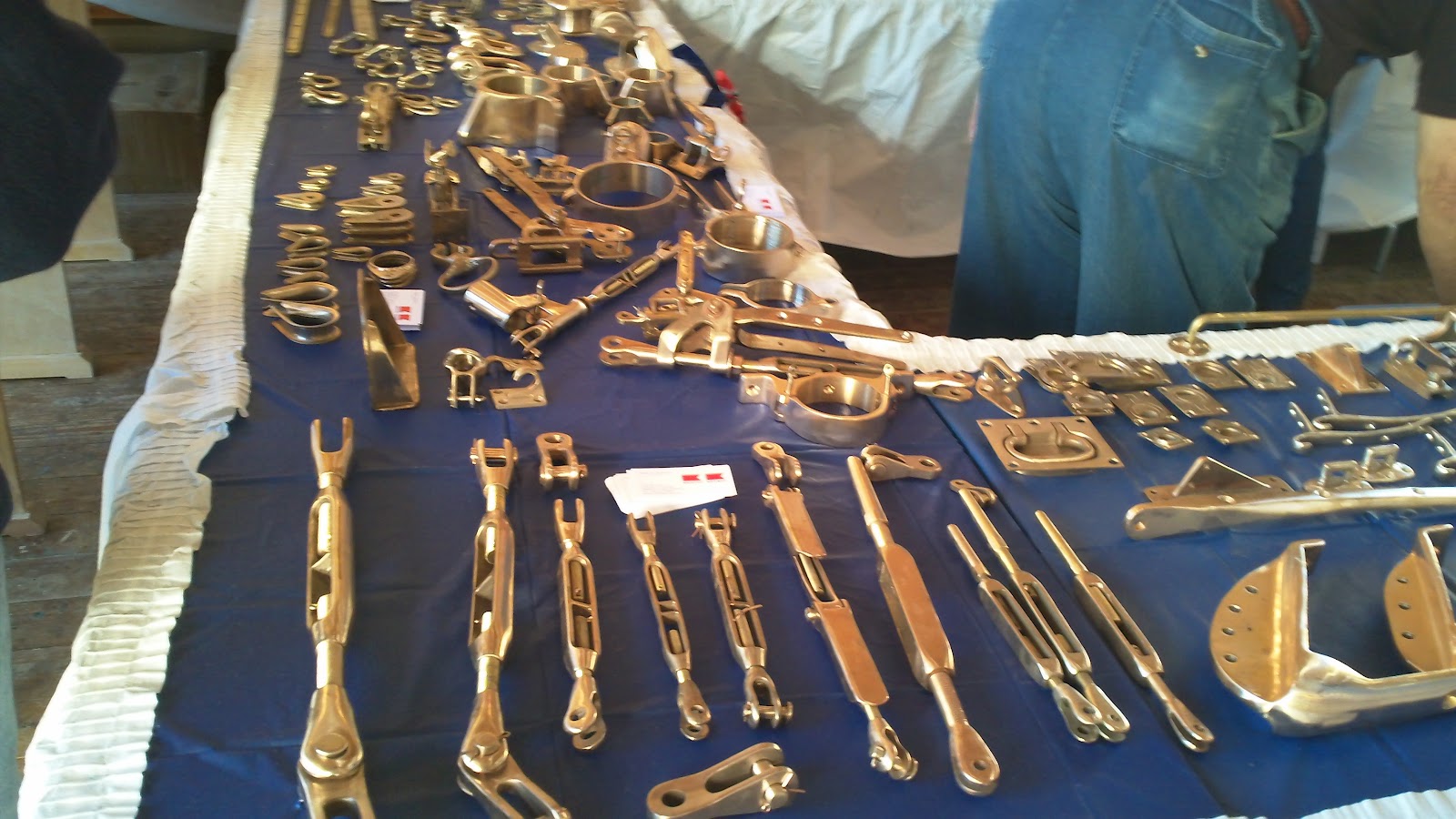
Need bronze hardware? Top quality hand tools? This is the place to go.


A few of the festival boats. Doryman has done a far better job than I of photographing the many beautiful festival boats. See his slideshow here.


Hang onto your socks, but this year I decided to enter the 26' and under wooden sailboat race. Yes, me, the guy who's never raced anything in his life. The guy who has no trace of the racing gene in his DNA decided to become a sailboat racer for the first time. Well, sorta. After I attended the pre-race skipper's meeting I quickly realized that I was utterly clueless so I invited Doryman to come along for my own protection. Mike is an experienced racer. I needed him badly. Thank goodness he accepted.
We headed out about a half hour before the race was due to start so we could locate the markers and check out the boat. Mike confirmed what John Welsford told me last year; that my jibsheet fairleads need to move aft about foot. I still haven't moved them. I have no excuses.
The race started at 2:30 but we got off to a very late start after we tangled with another boat that didn't yield the right of way to us. To make matters worse, the winds were light and the currents were strong, plus the wind shifted direction making it difficult for us as one of the smallest boats in the race. Still, we gave a Beetle Cat a run for its money, and passed a Goat Island Skiff for a while. Many of the smaller boats were unable to complete the course before the two hour time limit expired so they dropped out. But Mike and I were determined to finish the race, no matter what, even if the finish line was no longer there. We completed the course about 5 minutes after the time limit expired. Victory!
So, what's it like, I've been asking myself, to be a sailboat racer? I'll probably get in trouble for saying this but I must confess it didn't do a lot for me. Don't get me wrong, I have the utmost respect for skilled sailboat racers, and I mean no disrespect to anyone, but I'm afraid going around in circles as fast as you can just doesn't stir anything within me. I'm sorry. I really am. My DNA has no racing gene. It's not my fault! I think I'll just cross Sailboat Racing off my bucket list and go back to exploring, relaxing, and just generally enjoying myself when out sailing. Please forgive me.
There were lots of interesting boats this year, including some Welsford designs new to the festival.
The Oregon Coots brought two Welsford Mollyhawks named Salt and Pepper, built at the Port of Toledo Community Boathouse.


This is Humu, Arlie Blankenship's family built Scamp #74 which will feature a lateen type sail and an auxiliary electric motor with AGM batteries for ballast. Humu's name, color scheme, and choice of sail depict the Hawaiian state fish, the humuhumunukunukuapuaʻa, aka reef triggerfish. I love it when a boat has a theme.


Need bronze hardware? Top quality hand tools? This is the place to go.


A few of the festival boats. Doryman has done a far better job than I of photographing the many beautiful festival boats. See his slideshow here.


Hang onto your socks, but this year I decided to enter the 26' and under wooden sailboat race. Yes, me, the guy who's never raced anything in his life. The guy who has no trace of the racing gene in his DNA decided to become a sailboat racer for the first time. Well, sorta. After I attended the pre-race skipper's meeting I quickly realized that I was utterly clueless so I invited Doryman to come along for my own protection. Mike is an experienced racer. I needed him badly. Thank goodness he accepted.
We headed out about a half hour before the race was due to start so we could locate the markers and check out the boat. Mike confirmed what John Welsford told me last year; that my jibsheet fairleads need to move aft about foot. I still haven't moved them. I have no excuses.
The race started at 2:30 but we got off to a very late start after we tangled with another boat that didn't yield the right of way to us. To make matters worse, the winds were light and the currents were strong, plus the wind shifted direction making it difficult for us as one of the smallest boats in the race. Still, we gave a Beetle Cat a run for its money, and passed a Goat Island Skiff for a while. Many of the smaller boats were unable to complete the course before the two hour time limit expired so they dropped out. But Mike and I were determined to finish the race, no matter what, even if the finish line was no longer there. We completed the course about 5 minutes after the time limit expired. Victory!
So, what's it like, I've been asking myself, to be a sailboat racer? I'll probably get in trouble for saying this but I must confess it didn't do a lot for me. Don't get me wrong, I have the utmost respect for skilled sailboat racers, and I mean no disrespect to anyone, but I'm afraid going around in circles as fast as you can just doesn't stir anything within me. I'm sorry. I really am. My DNA has no racing gene. It's not my fault! I think I'll just cross Sailboat Racing off my bucket list and go back to exploring, relaxing, and just generally enjoying myself when out sailing. Please forgive me.
Subscribe to:
Posts (Atom)